12 June, 2008

Bembridge - Everything you've heard is true

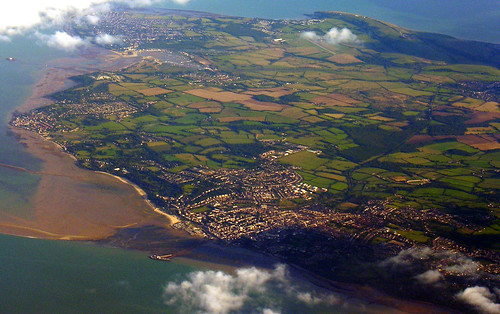
(Photo courtesy PhillipC)

I've read a couple of reviews from folks who've flown across to Bembrdge on the Isle of Wight and, without exception, they are all extremely positive.

Obviously I had to go and check this out myself, in that case. So last Friday I took a Piper Warrior II out from Thruxton on a quick jolly over the open water.

The weather was absolutely fantastic, CAVOK ("Ceiling and visibility OK") with a nice North-Westerly wind that helped us on our way down to the coast. In fact total flying time per the plan was 28 minutes.

On the way down I connected with Boscombe Down who held on to me for the grand total of 2.5 minutes before handing me over to Farnborough. They had me squawk a different code and held on to me for another 5 minutes before telling me to 'Freecall Bembridge and squawk 7000'. All this when I was still just a little South of Lasham! I tuned to Bembridge and listened to their tower for a while. Reception floated in and out as we passed over the South Downs at 2000ft heading towards Portsmouth and the Spinnaker Tower.

Passing over the Spinnaker Tower was great. I dipped the wing for a good look as we passed and headed out over the water.

I had researched the field at Bembridge quite thoroughly and knew the layout, the frequencies and the procedures, so it held no terror for me. However, the one thing I wasn't 100% sure of was the exact location. Sure, I knew where it was in relation to Bembridge the town, and the nearby coast. I had checked out the view on Google Maps to determine where it was in relation to other parts of the island. But when approaching over the Solent at 2000ft the perspective was different and, of course, distance was compressed. Nonetheless I headed for the general area that I knew the airfield resided in.

From the vantage point I had I could see a feature on top of a small hill almost directly ahead of me. I decided to use that as a navigation focus and head towards it. I believed the airfield was beyond that and to the right. Aiming for the hill gave me something I could use as a turning point to head inland to the field.

As we left Portsmouth I called Bembridge Radio who gave me the airfield information (Runway 30 Right hand circuit in use) and the circuit traffic (One on approach). The standard approach to Bembridge is a high pass along the runway with a break at the end (either left or right depending on which runway is in use) and then a drop down to circuit height on the downwind leg. Knowing that there was only one other plane in the circuit I requested a right hand base join instead. The permission came back 'No problem. Follow the C172 on finals'

About this time I was approaching the feature on the small hill when I realised that down below me (and about 3 miles ahead) was a C172 passing left to right. I followed its track and saw the airfield to my right this side of the feature I was using for navigation! I quickly made a left turn and dropped the plane down (using copious Carb Heat, of course) to swing in behind the C172 and make the approach.

Bembridge is a single, hard, runway a couple of miles inland from the coast. The coast at that point is steep and rocky and the land behind the coast rises and falls with small wooded areas between the coast and the runway. In addition to this there is a road that crosses the airfield just short of the runway threshold. Having researched the airfield I knew that this would cause an interesting approach. I was right. The hills cause the pilot to think he's lower than he is and start to lift the plane a little (even with the Bembridge PAPI lights), and the air current over the hills will lift the plane then drop it over the other side.

With a little bit of hill induced windshear and good reliance on the PAPI approach lights I planted the PA28 down past the numbers and casually braked to a stop about 2/3rds of the way down the runway.

"Welcome to Bembridge" came the voice over the headphones. "180 degree Trackback and take the first hard left to exit the runway". I complied, following the hard taxiway down to the HUGE field that serves as parking for visiting aircraft. I was given "Row Alpha" to park on and stopped the plane just in front of terminal building.

The landing fee was £10 which I paid at the cafe checkout along with my coke and Yorkie bar. Security were very accommodating and showed me where to sign in. I spent 2 hours in Bembridge sat on their decking area sipping a cold drink. Bembridge is home to the Britten-Norman aircraft company and they have several examples parked on the grass. They also service Cirrus aircraft and the mechanics were at work on one of them when I arrived.

Two things of note:

1) In the 2 hours I was there they flew two planes out for checks after servicing (a Cirrus and a B-N). I saw the whole of the Cirrus flight and I can tell you that approach he made was so low I swear he just missed a truck on the road before the threshold!

2) Bembridge must be a lot trickier in a Cessna than the Piper I flew in. For over 40 minutes I watched 2 Cessnas (a 150 and a 172, obviously pilots under tuition) doing circuits and almost without exception they came in high and fast every time, floating down the length of the runway before landing. In fact at one point the C172 was so high on approach that he missed the airfield completely and ended up going around. Everytime they crested the hill short of the Runway 30 threshold they would balloon up causing the pilots to drop the nose radically to lose height. I was convinced at one point I was going to see a prop strike because one circuit was so steep on final I was convinced he would bury the nose in the ground. Obviously the instructor recovered that one and earned his salary!

The return journey was pretty uneventful. I routed west from Bembridge over Cowes before turning back to Portsmouth and retracing my route North around Solent airspace. I was actually tempted to route directly through Solent controlled airspace to Thruxton but I had heard from an ex-controller that Solent hates in when GA planes do that. Can anyone confirm or deny that?

Just North of Portsmouth I contacted Farnborough for an FIS (Flight Information Service) only to be told to standby. It was VERY busy on the Farnborough LARS with it being a Friday afternoon/evening and I could hear the controller handling several planes and the traffic into and out of Farnborough itself. I waited for him to get back to me but he seemed to have forgotten about me so I kept a listening brief and made my own way back to Thruxton.

Flying time: 40 mins.

Flight Safety : Some figures


Picture by tomthetombinator
Reading today about the initial report on the Piper Cherokee which crashed near Oban in April 2007, it reminded me of the latest set of fatality figures for General Aviation in the UK (These figures and associated text are taken from the CAA's "Clued Up" magazine).

According to the CAA in 2007 there were 14 fatal accidents involving aeroplanes which claimed the lives of 25 people (If you have your copy of Clued Up, the graphic on top of page 9 and part way down has an incorrect legend, the colours should be swapped). This is by no means the worst year for fatalities (that was 1999 which had 15 crashes claiming 39 lives), but it isn't as good as, say 2003 which had 4 crashes claiming 5 lives.

So does this mean that flying is unsafe?

Absolutely not. Statistically it is still the safest form of transfer. Deaths per passenger mile are still substantially lower than all other forms of transport. But what it does point out is the fact that there are still common reasons that crashes occur. They are generally a result of more than one problem or reason, and they are often a result of bad judgement in bad weather, or incorrect speed causing stalling (it's quite ironic that one of the major causes of road deaths is excess speed and one of the major causes of flight deaths is insufficient speed). Skimming the CAA data the following reported circumstances appear "Descended into sea in low cloud", "Incorrect flap setting on take off. Collided with obstacle", "Crashed turning back following engine failure after take-off", "Crashed in Turkey in reported deteriorating weather'

The preliminary report on the Oban crash appeared to suggest that alcohol may have been a contributing factor with both the pilot and co-pilot being at least twice the legal blood alcohol limit and maybe as much as 5 times over. Of course this is rarely the only cause of an accident (any accident) and the CAA do point out that 'loss of control at low speed continues to feature in the initial reports' of many accidents. In other words keep your speed up when close to the ground and stay current with stall/spin avoidance procedure.

Lets put this in context, though. Since 1990 the number of UK accidents with fatalities in general aviation (aeroplanes with a weight <5700kg) is less than 200. This averages out at 11 per year (or roughly one per month). Compare that with the number of aircraft registered to fly in the UK and the number of aircraft movements recorded and the proportion is very, very minor.

Fly safe.

05 June, 2008

Ten tips for safer flying


The following article is slightly abridged and comes from Clued Up magazine, the CAA's free annual publication for pilots.

Ten ways to make your flying safer


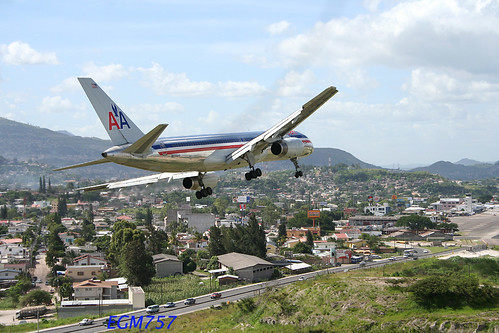
(photo by egm757lover)

1) A flight with an instructor
These are various reasons why you may need to take a flight with an instructor. It might be for licensing reasons, for insurance, because you want to build a new skill or just because you feel a little rusty at the start of the year.

However if you're not thinking of flying with an instructor on the near future you might want to think again. Whether you exercise your skills or not, they can get blunted over time, and new ideas and even new regulations come along and leave you behind. Bad habits can form without you knowing and a flight with an instructor can identify and tackle these.

But make sure it's not a jolly. Tell the instructor exactly what you want from the flight, discuss with him how you might be able to use your airborne time for the best benefit and so that you can try out the things you feel need brushing up on.


2) Become more qualified
Expending on number 1: why not do some differences training or work towards a rating? Flying a new type, or leaning new skills - aerobatics, tail dragging, strip flying and so on - can improve your general awareness of flying as well as adding extra skills. Night flying can teach new skills which can be transferred to day flying.

More challenging would be to train for an IMC rating. The skills learned can be of immediate use to VFR flying.

3) Maintenance - get to know your aircraft.
If you are an owner you will, or course, have read the POH (Pilot's Operating Handbook) cover to cover, but how much else do you know of your aircraft?

Even if you're not mechanically minded, watching an engineer working on your aircraft can add tremendously to your knowledge of the your plane and how it works. More often than not you'll get some free hints on what to look for in the walkaround, as well as a few pointers on things to look for on your particular type. it's not always easy to see ow this might help you in a crisis, but sometimes it does. This could be one of the best safety investments you ever make.

4) Get yourself a weather subscription - and an AIS login
Weather is a factor in a surprisingly large number of accidents. Whether it results in a tragic controlled flight into terrain caused by unexpected visibility or a simple bent nosewheel because by windshear, the weather is often the cause.

So it pays to make sure that you are well up on your Met. There are a number of organisations offering Met courses for aviators, which will not only help you make a personal forecast of the weather and an assessment of the current situation, but will make you able to understand the effects of weather on your flight.

But you will, of course, need to get the weather from an official source before you go flying, so make sure that you sign up to one of the web-based services which are available, and make sure you make full use of them!

5) Evaluate yourself medically
It's thankfully rare for a pilot to be incapacitated while at the controls. but medical or human factors considerations can often lurk behind the other, more obvious causes of an accident. beware of them.

Are you on medication or have you drunk alcohol recently? The effects of alcohol are well known, but with medications it's not always clear. If there is any doubt either don't take the medicine or don't fly.

Obviously recreational drugs are incompatible with flying - despite some anti-heroic attempts to prove otherwise.

While you're in the air you still need to be aware of your body. The thinner air at altitude and the change in pressure as you climb or descend - and the way that they affect your nasal passages - may indeed be the first indications that you are going down with something.

Mental and emotional stress can also affect your flying and decision making - this can be a difficult call to make, as many pilots use flying as a means of relaxation, and it's not easy to tell whether the stress alleviation element will be enough to justify flying.

Also make sure you know the signs of hypoxia, hyperventilation, carbon monoxide poisoning (do you have an in-date detector in the cockpit?) and the rest, and have a plan about what to do of you realise you're suffering from them.

Finally think about injuries - mainly those you are recovering from. Broken limbs, twisted ankles and pulled muscles can all be put to the test in the flying environment and suffering pain and discomfort as a result is not a good thing.

6) Listen to your clearances
Runway incursions are a major issue worldwide, and have caused some of the worst acdidents in aviation industry (including what is generally considered to be THE worst accident, when two 747's collided on the runway in Tenerife, killing 583 people) So make sure tat you listen carefully to clearances. Don't just hear what you expect to hear: write it down, read it back and refer to it if you're in doubt.

It's not just runway clearances which need this care: every mis-heard, half-remembered or misunderstood clearance is a potential accident. So if in doubt, ask again. (In addition always check any runway or departure clearances you have been given yourself visually. I was cleared to take-off on a solo flight during my initial PPL training in the States and immediately told to hold short as a Piper was on short finals for landing on the same runway. it was a simple controller slip but it could have caused damage to two planes and fatalities to two pilots - Gary)

7) Go to a CAA Safety Evening
There was a statistic which said that nobody who had been to a CAA safety evening had suffered a fatal accident. Although that can no longer be claimed, the Safety Evenings are highly recommended as a way to improve your safety thinking. Cynics say it's because only safe pilots go to Safety Evenings. So make yourself a safe pilot and attend one. And don't just listen, participate. Ask questions, and use the whole evening to share experiences, techniques and advice with others.

8) Go on a ditching course
The UK is an island, so if you want to go anywhere else you'll have to go over water. In addition many flights over UK airspace cross water - the Bristol Channel, the Channel Islands, Isle of Man, Northern Ireland - even the Isle of Wight - all involve cross water flights. And, however unlikely, a cross water flight does involve the possibility of ditching.

Ditching is one of those thing that is so difficult to prepare for because there are so many factors involved, ad so few case histories to learn from. but there are things you can do to improve your chances of survival if you do have to make a controlled landing on water.

The most critical factor is to extend your survival time as much as possible. Wearing (and knowing how to use) a life jacket is vital. Knowing how to escape from the cabin is another. make sure you brief your passenger - even if there aren't any (because you'll also be reminding yourself of the actions to take in the case of an emergency and I bet you haven't thought about that recently)

All of these things and more will be explained in a ditching course at one of the many centres around the UK.

9) Check your height
Controlled flight into terrain can spoil your day. But experience suggests that FIT is rarely the sole cause of an accident - it's usually the result of other factors. Tiredness and lack of concentration, spatial disorientation, flight into poor weather, lack of communication, wrong pressure settings and poor planning can all contribute. Airliners have Ground Proximity Warning Systems and some light aircraft feature GPS units which can provide your height above terrain and warn you of approaching danger (make sure the data is up to date); if you don't have these, it's down to you.

Being aware of your surroundings, whether you're in VFR, marginal VFR or IFR is essential. Use all the tools at your disposal: your eyes, your ears, your altimeter (If you have two have you done a simple cross check?), your map with safe altitudes and so on. None of these is 100% reliable in every single circumstance, but together they increase your safety factor many times over.

10) Do your weight and balance checks
How long is it since you did a proper check? Not just "two people and full fuel should be OK because it was last time", but a real number-based exercise? Interesting academic research currently being done seems to show that changes in fractions of inches in the centre of gravity can make a big difference on the safety statistics on particular types - so make sure that you know that you are within safe limits and can clear the obstacles at the end of the runway!

11) Enjoy your flying
(Did we say 10 things? Well, we couldn't leave this one out...) A safe pilot is a happy pilot, so enjoy your flying and there'll be no excuse for not being safe.

03 June, 2008

Clued up

The Civil aviation authority has started a yearly magazine which it sends free of charge to all pilot licence holders registered with them. It is called "Clued Up' and I received my 2008 copy yesterday morning.

As you may expect from the CAA the prime driver behind this publication is safety and compliance to procedure. As such it contains articles about reducing airspace infringements, identifying and dealing with Carb Ice issues (a great little article written by my RT examiner Irv Lee) and links to various documents/PDF's and standards from the CAA website.

There is also a link to the Fly on Track website which I have identified on this site before as being useful. In particular the radar replay's which show what happens when GA pilots (or indeed military pilots) infringe on controlled airspace. These are well worth reviewing if you are looking at flying anywhere near controlled airspace.

One of the best articles was about Red Arrow airspace infringements (i.e GA aircraft infringing airspace when a Red Arrow display is occurring. This happens every year and causes the Arrows to cancel the remaining parts of the display). Whilst it may seem like something that is difficult to identify and know, there are clearly marked notices of this and the information can be found in NOTAMS on the AIS web site, or by calling 0500 354802 prior to departure.

Other articles to read include a fascinating one about the Air Accident Investigation board, the us of flight simulators in training, and information from a PhD student studying Information Flow and it's relevance to flight safety. There are also articles from experienced pilot talking about errors they have made and what caused them as well as ten tips for safer flying. I will be replicating that article on this site over the next couple of days as I think it is a well written and very useful piece.

26 May, 2008

Hamburg wing strike - more details

You may remember the A320 which had a wing strike on approach to Hamburg at the beginning of March. The German investigation agency BFU has released a preliminary report about the moments before the accident.

Without reading the whole report it appears the following points can be gathered.

1) The plane was flying under dual control (i.e. both pilots were flying using the side sticks. Apparently the A320 allows this by summing the inputs), although the co-pilot was in charge of the approach
2) 50% of the approaches in the previous 10 minutes had resulted in a 'go-around' or aborted landing
3) The captain had over 10,200 hours experience including 4,120 on the A320 but the young lady who was in charge of the approach had only 327 hours on the A320
4) The crosswind at the time of the runway was 3knots over the maximum stated A320 crosswind component allowed for a manual landing, with gusts up to 17kt over the limit
5) The crew were offered an alternate runway where the crosswind would have been less, but declined (They ultimately landed on this runway after the wing strike)

So let me put this into context for you (or let me play Devils Advocate.....)

"You're an experienced A320 captain with many, many hours in type. You are flying into a runway where you know that crosswind issues have caused half the planes in front of you to miss their approaches. You decide not only to continue your approach to the runway, despite being given a more suitable runway to land on, but you then hand the flying of the plane over to a young, inexperienced co-pilot who then makes the approach into conditions that are outside the operating parameters of the plane you're flying.

And then the wing hits."


Hmmmm... It seems fairly black and white when you look at it like that doesn't it?

However, let me put a different spin on the same facts.

"As an experienced pilot with many hours on type you realise that the only way for your co-pilot to gain experience of real life crosswind landings is to allow her to fly them herself. Knowing that half the planes in front of you have already managed the landing without a problem - and realising that the crosswind parameters were marginal due to gusting, you hand the approach over to the co-pilot and keep a hold of the controls to help should the need arise. With the two of you working the controls you fly the plane onto the runway where a slight gust lifts one wing a little. You elect to go around and try the less hazardous approach only to realise later that the wing had made contact."


In the heat of a crosswind landing it is very easy to make decisions that - in hindsight - are not the best ones to make. I, personally, have made crosswind landings that were 'interesting' to say the least. However in a Piper Warrior with just me and the instructor there's a lot less riding on a careful approach than an A320 with passengers and freight on board.

I'll keep an eye out on this for you.

As you can see, the facts can support two different interpretations and it then becomes difficult to see who, if anyone, is at fault.

Although if it was me I would have gone for the other runway regardless....

21 May, 2008

ATC Visit to Farnborough


(Image courtesy Steve Parker)

As part of the Visit ATC month (which I have blogged about before) I was invited to go and spend some time with the good folks down at ATC in Farnborough.

We happened to go on a really good day as the weather was fine and - as an added bonus - the Farnborough Air Show press day coincided with our visit. There were several unusual planes there and a fly past of Extra's had been arranged.


The Tower
We were met at the gate by Lyn who would be our guide for the day and - once all our party had arrived - we headed up the control tower (Two 'stops' in the elevator, but in actual fact over 100ft in the air)

The control tower was an oasis of calm considering the number of movements it deals with. Local planning caps the limit at 25000 per year, but one controller and an assistant manage all this themselves (However, during the air show there is another controller as well).

The view from the tower was fabulous. As you would expect the whole of the airfield was visible as well as the overhead for nearby Blackbushe, and the Bagshot mast that delineates the southwest corner of the Heathrow TMA. Curiously, though, RAF Odiham (whose MATZ is controlled by Farnborough and is about 8 miles away) is not visible due to rising land on the western approaches to the airport.

Looking out over the airfield we could see a couple of special planes in for the press launch. I saw what I think was a DC3 Dakota as well as a glider and a Dove. They were all parked over to the right of runway 06.

Lyn explained the workings of the tower. All flights are controlled by paper strips. These are mounted on colour coded bars to help indicate movements. Blue bars indicate take-off's, buff/brown bars indicate landings and a third colour is used for overflights. When a flight plan is filed a strip is printed from the computer showing all the details and the assistant mounts it in it's correct coloured bar. As the plane calls in the controller can then match it with its strip and know where it should be and when. It is usually handed over to the tower about 6 miles from touchdown (and vice-versa for take-off's)

Shortly after we arrived the flight of Extra's turned up. We could see them approaching from the east and they flew to the north of the airfield and circled for a while awaiting clearance. After an incoming plane had landed they were given clearance and approached from the east. The did a flyby along the runway in perfect formation, sweeping in a lazy horizontal circle at the western end to approach back from the west. On their westerly approach they were given looping permission and, just short of the threshold they all pulled back and did a perfect loop-the-loop at fairly low level before tracking back down the runway and performing an un-and-break to prepare for landing. Each plane broke high and right, in sequence, to give separation from it's neighbour, prior to turning back downwind and doing an abbreviated base/final turn. All four plans landed within 90 seconds. Most impressive.

We moved downstairs to the part which I, personally, was the most interested to see :

Farnborough LARS.
Farborough LARS is now the radar installation that monitors all non-controlled airspace in the South West of England. Their coverage stretches from the South coast as far North as Cambridge & the Fens and from the East coast as far West as Southampton. All this is managed through 3 controllers sitting in a room at the foot of the tower at Farnborough!

The radar screens are brand new and state of the art, able to identify both primary and secondary signals, but with the ability to process secondary signals prior to displaying them. So, for example, a controller can say 'I only want to see things that are moving at a speed greater than 60 knots'. This will effectively remove anything that is slower than
that from the screens (gliders and the like). Transponder codes can be identified quickly as well and preprocessed prior to display. This means that anyone squawking '7000' will appear with a 'W' next to their blip. Anyone higher than a predefined altitude (say 25000 ft) will appear as a 'U' and anyone showing a known airliner transponder code will have their flight call sign displayed ('BAW297', for example). Geographical features can be added (or removed) as needed and the whole scale can be changed if required. This makes the screen a lot easier to read.


Flight Strips
I sat with Emily (who was controlling the LARS East sector out in Kent) and we chatted about how things work when a GA pilot contacts them. Back in the days when you did your RT exam you were taught the sequence of information to pass when asked to 'pass your message'. This sequence is:
  • Call-sign
  • Aircraft type,
  • Point of departure and destination,
  • Altitude with altimeter setting,
  • Intentions
  • Request.
The reason for this is that whenever an aircraft contacts LARS and asks for Flight information or Radar information, the controller will grab a blank flight strip, write your call sign on it (and the time you made contact) and say 'Pass your message' Then, when you pass the information back it will be written in the appropriate field on the flight strip. The fields are expecting the information requested above in that sequence. If you pass the information in a different sequence the controller has to jump all over the strip to fill your details in.


Transponder codes

The allocation of transponder codes has always seemed to be a bit random to me. But it appears that there is a method to the madness. Code are allocate depending on your controller unit and your departure airport. For example a plane being controlled by Farnborough LARS west departing from Blackbushe will usually be given a 403x code. The numbers are allocated sequentially and reused as the planes transfer to other controllers.

Each strip is given a transponder code and dropped into the stack sequentially. That way the controller can identify a plane on the screen through it's transponder code then get the call sign for that plane on the strip.

TIP: If you want a Radar Information Service, it's best not to ask for this during busy periods, or in an area where there are lots of aircraft. RIS's increase the controller workload to the detriment of other aircraft. Try flying out over the Kent area if you want a quiet patch - an RIS at that point will usually be accepted

Controllers usually work a maximum 2 hour stretch (Which, if you're controlling Farnborough LARS West, is a LOT of work) and then take a break.

Despite the fact that they were short of folks (the recent expansion of the LARS service to include LARS North and LARS East had stretched them to the limit) everyone was more than happy to talk (usually while controlling planes and answering phones at the same time) and overall the group spent a little over three hours in their company.

I would like to thank Lyn Combe and everyone at Farnborough ATC for their time and hospitality. It made the day really interesting.

12 May, 2008

A 'fun' emergency landing

I was down at the local field airfield over the weekend listening to ATC (Tip: An excellent way to tune your ear to ATC lingo and speed is to listen using a cheap airband receiver), when I heard an exchange between a pilot and the tower.

The pilot was obviously an elderly gentleman who had flown in earlier on during the day. He was a little unsure about the airfield and started asking directions for taxiing out to the runway for a departure.

ATC were very obliging and steered him in the right direction. However as he was doing his run-up/engine check he obviously noted a problem and asked for time to investigate.

Once again tower duly obliged and he taxied away to a disused bit of tarmac to fiddle with whatever needed to be fiddled with. I could see the plane from my vantage point and noted it was a Piper Cub type aircraft (Tandem seating, cloth covered, fairly old and basic), and that it was painted in a lurid green livery.

After about fifteen minutes he came back on the radio, asked for permission to taxi, got back to the holding point, did his run-up and requested clearance. This was duly given and he started his takeoff run.

About 50 feet off the ground he came back on the radio asking for permission to switch frequency to the nearest LARS service with the following exchange

"Bxxxx Tower, this is Golf - Alpha Alpha requesting permission to change to Fxxx on 125 decimal".. there was a slight pause "Oh no, my engine's playing up again. I'm going to have to land immediately"

Tower gave him permission to land and - with his engine audibly misfiring even from my vantage point at the far end of the airfield - he executed a swift 180 in the air and landed back on the runway he had vacated only moments before - in the opposite direction!

I reckon the time from wheels up to wheels down was no more than about 20 seconds.

Now if you're going to make an emergency landing, that's the way to do it!

Apture