16 December, 2008

How to Walk Away From All Your Crosswind Landings

By Doug Daniel

I was recently asked about the possibility of a wingtip strike when landing in a typical light plane like a Cherokee or a Cessna 172. Specifically, I was asked about how far the aileron control could be deflected without hitting the tarmac when one or both of the main landing gear is on the runway after landing at near stall speeds.

I will admit that I have never tried to hit the runway with my wing tip and I don't know anyone who has. However, it certainly can be done. Perhaps a better question is: what landing technique will guarantee that the wingtip does not strike the tarmac in a crosswind?

I want to talk about landing techniques in a really strong crosswind before I tackle the issue of wingtip strikes. After all, wingtip strikes are not a credible issue except in crosswinds that approach the airplane's crosswind limitations.

To make controlled crosswind landings, you should master the skill of pointing your airplane in the same direction that it moves over the ground. If the airplane is pointed in some other direction when you touchdown, the best you can hope for is abrupt side forces on your landing gear followed with a swerve as the airplane swings in the right direction. The worst is loss of directional control followed with a trip off the side of the runway, possible ground loop, nose over, wingtip strike, or all of the above

Pointing the airplane it the direction it moves is the most essential landing skill. It is not as easy as it sounds. And it certainly requires practice before it can be mastered. In a nutshell, here is how to do it:

Point the airplane in the direction that it travels by turning the nose with your rudder pedals alone. Move the airplane from side to side by changing your angle of bank with ailerons. Control airspeed or height above the runway by changing your pitch attitude with your elevator. This lets you keep your wheels pointed in the direction the airplane moves and keep your airplane directly over the middle of the runway. This is exactly where you should be when you land.

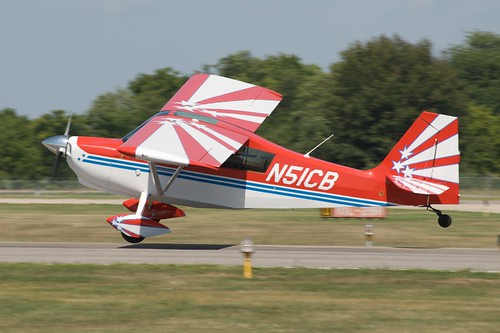
Landing in a crosswind, you touch the runway while cross controlled. This is a steady state condition. Your airplane is not rolling around its long axis. That is to say that it has a steady angle of bank. In a general aviation, production light plane, you cannot cross control far enough to touch the wing tip.

The technique that works best is to try to keep the downwind main wheel barely off the runway as long as possible after you have touched down with the upwind wheel. To hold the downwind wheel off, you must continuously increase aileron control defection until it reaches its limit. Eventually, as the airplane continues to slow down, the ailerons lose power and the other main wheel will settle onto the runway.

Finally in any well executed crosswind landing, the aileron control will be pushed to its limit. An important point here is, that just like any other aspect of good airmanship, you should move your controls smoothly and with the purpose of changing the airplane's attitude. A snap roll is the only situation where I deliberately move the controls violently.

Now, back to the subject: how might you strike a wingtip? I can think of two ways.

Suppose you suddenly and violently slapped the aileron control all the way to its limit. Two things would happen: the airplane would no longer be properly cross controlled, and it would start to roll. Now it is possible to strike the wingtip. In other words, you would have just fouled up a perfectly good crosswind landing. You would have put the airplane in a very difficult situation, one that would require a particularly skilled pilot to salvage. I don't recommend it.

The more likely situation is that you land wings level in a strong crosswind. That is to say, not cross controlled. Here, the airplane is crabbed into the wind and the wheels are not aligned with the airplane's path over the ground. Because the airplane is not aligned with its path through space, the wheels will generate a very strong side ways force on the undercarriage when they touch the runway. With luck, this results in a sideways skid. Just like in a car, if the wheels are far enough apart, the airplane skids until it either stops or straightens up. If the wheels are not far enough apart, you're unlucky. The airplane rolls over, striking the ground with its wingtip.

The lesson here is: use proper crosswind techniques and you will not need to worry about wingtip strikes.

Doug Daniel, long time flight instructor, invites you to visit http://www.FlyingSecretsRevealed.com/flying_questions/ for more flying articles like this one. You may also feel free to contact Doug by visiting his website.

Article Source: http://EzineArticles.com/?expert=Doug_Daniel
http://EzineArticles.com/?How-to-Walk-Away-From-All-Your-Crosswind-Landings&id=1768506

(Image courtesy of pmarkham. Released under a creative Commons attribution share alike license)

14 December, 2008

How much does a free flight cost?


I booked a flight today. The flight was from the UK to Spain sometime early next year. The reason I booked it: it was free.

That's right, free - the advertised cost for that flight was £0.00. With the imposed duties and taxes the amount I should pay is £20. A great deal. I was delighted.

Having made the, admittedly easy, decision to purchase I clicked on the site to book the ticket. It took me to a page I've never seen on airline booking sites before. It started asking questions:

  • Was I going to be checking bags? Yes. So you'll need to check in at the airport. That's £4 each way for airport check in.
  • How many bags are you checking in? One. That's £8 each way for the first bag and £16 each way for subsequent bags.
  • Do you want to be on of the first to board the plane? Yes. That's £8 each way for priority boarding.
  • Will you be taking any sports equipment? Yes, golf clubs. That's £25 each way.

Each question I answered added extra cost to the flight. Each question I answered reduced my faith in the customer service of the airline. Each question I answered annoyed me more and more.

The terms and conditions of flight for this airline is over 6000 words long. Each paragraph details something that either reduces the airlines liability, increases the passengers liablility or increases the cost. (note these are not the general terms and conditions, these are just the terms and conditions related to actual flights with this airline)

The terms and conditions of flight are where you find, for example, that this airline charges you for checking in at the airport. You can check in on-line for free, unless you have luggage in which case you will need to check in at the airport. If you want to take hand luggage (which is the only way to avoid the check-in fee), it should weigh no more than 10kg and not exceed the maximum dimensions of 55cm x 40cm x 20cm. (That's a little less than 2 feet by a little more than 1 foot by 7 inches deep). Thank God I'm not taking more than one bag on board, nor do I have children with cots and buggies. These would have been extra and - God forbid I needed to take my own oxygen - this would have cost me £100 each way.

So when they totaled up the fare, my 'free' flight was going to cost upwards of £100. As I stifled the desire to throw my Macbook out the window I clicked the 'purchase now' button... only to find another £4 added to the cost! This, apparently, was a 'processing fee' for paying by credit card. Over the internet. Which is the only way to pay this airline when booking over the internet.

If it costs £4 to book a flight over the internet, the flight is not free. It can never be free. The cheapest it can be is £4!

I've mentioned in the past how behavioural psychologists should do more work for the airlines. This airline surely doesn't understand customer behaviours.

Yes, £100 for a return trip from the UK to Spain is still excellent value, I understand that. But £100, a disgruntled customer and a misleading airline pricing structure, for a 'free' flight is not on.

What would have been nicer is to do the following:
  • Cost of air fare: £180 return
  • Are you checking less than 3 bags? Yes: Let's deduct £50
  • Are you taking golf clubs? Yes: Price is included
  • Are you wanting priority boarding? No: Let's deduct £16
  • Are you checking in on-line? Yes: Let's deduct £8

Total price £100. Result: One cheap air fare. One happy customer and one airline getting exactly what it asked for.

(Picture courtesy of Irishflyguy. Released under a Creative Commons attribution, share-alike license)

01 December, 2008

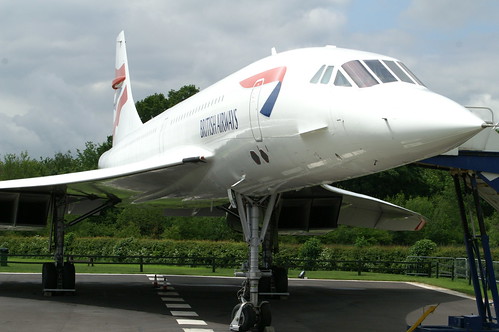
Mach 1 ride on Concorde at Oshkosh 88!


(image courtesy of Dave Hamster. Released under a Creative Commons Attribution license)

It's not often I'll pimp a fairly low quality Youtube video here on the Flying Cafe. But I saw this video on Concorde and figured "What The Hell"

This is a download of a VHS video taken on board a BA Concorde back at the Oshkosh Air Show in 1988.

With the demise of Concorde a few years ago it's impossible for videos like this to be made any more. The high cost of doing something like sending a supersonic plane (one of only 13/14 in existence) to an air show made this prohibitive even before the plane was canceled. Now of course there are no airworthy versions left which means this is a time capsule to the past.

A couple of things to notice. I believe that even on regular flights the cockpit door was left open during the journey and people were allowed to wonder up to the cockpit as they desired (although I'm not sure how this changed after 9/11). According to Dave Gunson the Mach meter isn't actually attached to the instrumentation it's just one of the cabin crew cranking it up behind the scenes (although I'm pretty sure that isn't true). It is true that you can balance a 50p coin on the tray table as the plane transitions through the sound barrier and it will not fall over. It's that smooth.

Just to put the flight in the video in perspective, at the time the Concorde went out of service a transatlantic return ticket LHR to JFK retailed at around $10,000 (£6000). That equates to around £1000 ($1600) per hour for the flight. For this you got a narrow, cramped, leather seat, tiny windows and very little in terms of in-flight movies etc. But you did also get first class cuisine, free champagne, a view of the curvature of the earth from 60,000 ft, priority landing at LHR on the runway closest to the terminal (regardless of the runway in use) and the luxury of knowing that you have bought the one thing that money cannot buy - time: A 10am departure from LHR would get you into JFK at 9.30am, giving you time to hold an important meeting and catch the return flight to arrive back in London on the day you left.

I lived in London for many years and saw, literally, thousands of flights head over the city towards Heathrow. Almost without exception the only plane that made me and other Londoners stop and look twice a day was the Concorde. A fabulous plane.

Has anyone else reading this flown Concorde? Loved it? Loathed it?

Thanks to airpigz for the video which has recently been updated.

14 November, 2008

You might be a pilot if....

I found this post on the Airspeedonline blog and it made me smile.

It's called "You might be a pilot if..." and is a little close to the bone in certain areas. I have to admit I've done a couple of these (but I'm not saying which ones....)

For those of you who are UK based and don't get the Jeff Foxworthy reference read this.

Any others you would add to the list...? Drop them into a comment, please.


10 November, 2008

The UKGA has decided

The guys from the UKGA have now made a decision about how they want to proceed with funding and managing the site...
Dear fellow UKGA-er,

The lines are closed, the votes have been counted, and we can now reveal...

In our first email to you, we said that we wanted to find out just how many people would support us if we made UKGA a commercial site. Well, we've been absolutely overwhelmed by the many kind comments you've sent us, and by the pledges of financial support you've made. It's gratifying to know that even what we've done so far is proving useful to you.

On the basis of your commitments, we've decided to go for it. In the past, when it had to fit around other projects, UKGA moved forward slowly, and we're as excited as you are by the possibilities when we're working on the site every day.

Our top priority is to get UKGA on to a more stable and fast hosting platform, which we're already doing. Because of your support, we're testing our new server now, and we hope to move the site onto it during the next week. We'll be in touch over the next couple of days with details of the move. After that we will be making some immediate changes to the site, particularly to the NOTAM system. We'll be setting up a blog too, so that you'll be able to see what we're working on, what's coming up, and give us your feedback.

One area of concern that has been raised several times is that of what we're going to do with the forum, and whether it should be covered by a membership. We've decided that the forum should be accessible to everyone free on an ongoing basis. Likewise, the classified service has become very popular, and we don't want to stop that valuable service. Therefore, we'll also offer free classified adverts and hopefully extend this with an emailed classified newsletter. The other parts of the site will be available on a subscription basis.

So, the time has come for us to ask you to make good your pledges. As many of you know, we already have PayPal available on the site, which will let you pay by credit card or PayPal account. This is the fastest route, especially via the Paypal link on the site, as it will update UKGA automatically. If you prefer to go to paypal.com directly to send your subscription, please use the same email address that you use for UKGA, otherwise we won't know who has sent us the funds!

If you like, you can send us a cheque: UKGA, 297 College Road, Whitchurch, Cardiff CF14 2NW. You can also pay by bank transfer if you wish. Drop us an email and we'll send you our bank account details.

Finally, we'd like to say an especially warm thank you to everyone who has already sent a contribution. Several people on receiving our email immediately turned to PayPal and sent us a membership fee, without any questions. Thanks again to you all, and thank you to everyone who has supported us in the past.

For now, happy flying, and I can tell you that we're looking forward to delivering more great functionality at UKGA.

Nev & Phil
So there you go!

Well done, guys, looking forward to details of the subscription costs etc....

09 November, 2008

Most anyone can become a pilot

By Chris Bridges

The quest to learn to fly is a lot easier than what most people think. You don't have to become a commercial or military pilot in order to fly.

You can be part of general aviation, or the area of aviation where pilots fly for the sheer enjoyment of flying.

Today there are thousands of potential pilots, just like you, who are learning to fly. They come from all walks of life and have various reasons for wanting to learn to fly. Some fly to expand business opportunities, while others seek to attain careers in the aviation industry. Some are even looking for an activity that they can share with their family.

Whatever your reasons may be, there are some basic requirements that you will have to meet in order to fly solo (which is a requirement to get your your license

In the United States, you must be at least 16 years old (to fly solo), speak English, and pass a basic medical exam.

In Canada, you must be at least 14 years old (to obtain a Student Pilot Permit, 17 years old to obtain a license), speak English, and pass a basic medical exam. In Canada we also offer a Recreational License which takes half the time to get as opposed to a Private License, therefore it is cheaper.

In the United Kingdom, you must be at least 16 years old (to fly solo, 14 years old to start logging your time, and 17 years old to get your Private Pilot License), speak English, and pass a basic medical exam.

In Australia, you must be at least 16 years old (to fly solo, 17 years old to hold a Private Pilot License), speak English, and pass a basic medical exam.

That's all. So, as long as you meet these requirements, you can take to the skies.

Please visit www.learning-to-fly.com for a lot more information about aviation and flying, including aviation history, aviation employment, pictures of airplanes, experimental aviation (kit planes or home built airplanes) and aviation weather.


I am an avid supporter of flying, with a Commercial License, Multi Engine Rating, and Multi IFR Rating. My time in the air has been few and far between as of late but it doesn't diminish my passion for aviation and anything related to aviation. I wish to pass that passion on to others so feel free to spread the word.


Article Source: http://EzineArticles.com/?expert=Chris_Bridges
http://EzineArticles.com/?Most-Anyone-Can-Become-a-Pilot&id=1496377

08 November, 2008

Blind pilot guided to land by RAF:

A pilot who suddenly went blind while flying his plane at 5,500ft (1,676m) was guided in to land by an RAF plane.

A pilot suffered a stroke while flying, went blind as a result, and was guided down to a successful landing by the Royal Air Force.

The pilot was on a flight from Glasgow Prestwick Airport to Colchester, Essex when the incident occurred. He declared a mayday. Despite air traffic controllers' efforts, the pilot was unable to land
the plane at nearby Full Sutton Airfield near York and was directed to
RAF Linton-on-Ouse. A plane was scrambled from the airfield to fly alongside him and - with the aid of RAF controllers - guide him down to the runway.

With his limited sight he was unable to see the runway until immediately prior to landing, but managed to place the plane on the middle of the runway, slowing it down to a stop just before the end.

A scary experience, I'm sure, and one I hope nobody ever has to go through.

Kudo's to the RAF ATC. I've mentioned before in these pages that they provide an excellent service and this goes to prove the point.

Apture